
Celebrating 26 Years of IPSR
Join our journeyThe Learning Machine Mystery Challenge
The Learning Machine Mystery Challenge was successfully conducted as an engaging and thought-provoking event that challenged participants to apply their knowledge of Machine Learning concepts, data preprocessing, model evaluation, and logical reasoning. Designed around real-world problem-solving, the challenge encouraged participants to investigate hidden flaws within ML workflows and understand the reasoning behind accurate predictions.
The Concept
Machine Learning is not just about training models—it is about ensuring that every stage of the workflow, from data preprocessing to evaluation, is carried out correctly. Even minor errors in feature engineering, encoding techniques, scaling, or model assessment can significantly impact prediction accuracy and lead to unreliable results.
The challenge presented participants with practical Machine Learning scenarios containing hidden mistakes, conceptual traps, and analytical puzzles. They explored topics such as feature scaling, label encoding, confusion matrices, KNN, SVM, and model evaluation, requiring them to analyze the behavior of algorithms rather than rely solely on theoretical knowledge.
By taking on the role of Machine Learning investigators, participants examined data, identified hidden issues, and uncovered the reasoning behind model performance.
Challenge Highlights
During the competition, participants were required to:
- Detect errors in Machine Learning preprocessing pipelines.
- Evaluate the effects of missing values and skewed data distributions.
- Analyze how improper feature scaling influences KNN and SVM algorithms.
- Identify the limitations of inappropriate label encoding techniques.
- Interpret confusion matrices by examining false positives, false negatives, and overall model performance.
- Recognize overfitting, underfitting, and sensitivity to noisy data.
- Understand SVM concepts, including kernels, margins, and decision boundaries.
- Apply analytical thinking to solve practical Machine Learning case studies and prediction-based challenges.
The focus extended beyond choosing the correct answer, emphasizing the reasoning behind each concept and its practical impact on Machine Learning applications.
The Experience
The event fostered an interactive learning environment where participants approached Machine Learning problems with curiosity and analytical thinking. They investigated hidden errors, evaluated model behavior, and discovered how seemingly minor preprocessing decisions could dramatically influence prediction accuracy.
Participants also explored the strengths and limitations of evaluation metrics such as Accuracy, Precision, Recall, and F1-Score, particularly when working with imbalanced datasets in applications like fraud detection and healthcare.
Rather than emphasizing memorization, the challenge encouraged participants to develop a deeper understanding of how Machine Learning models perform in real-world scenarios.
Key Takeaways
- Effective preprocessing forms the foundation of accurate Machine Learning models.
- Feature scaling plays a crucial role in improving the performance of distance-based algorithms such as KNN and SVM.
- Selecting suitable encoding methods helps avoid biased or misleading predictions.
- Preventing overfitting is essential for building models that generalize effectively.
- Confusion matrix analysis provides valuable insight into classification performance.
- Metrics such as F1-Score offer a better evaluation of imbalanced datasets than accuracy alone.
- Successful Machine Learning requires critical thinking, logical reasoning, and a strong understanding of data—not just coding skills.
Outcome
The Machine Learning Mystery Challenge enhanced participants' understanding of essential Machine Learning concepts while strengthening their ability to identify workflow errors, interpret model behavior, and solve practical AI problems. By tackling realistic scenarios, participants developed the analytical mindset needed to evaluate Machine Learning systems critically and transform data into reliable, meaningful predictions.
You may also like

Crack the Data Challenge
June 26, 2026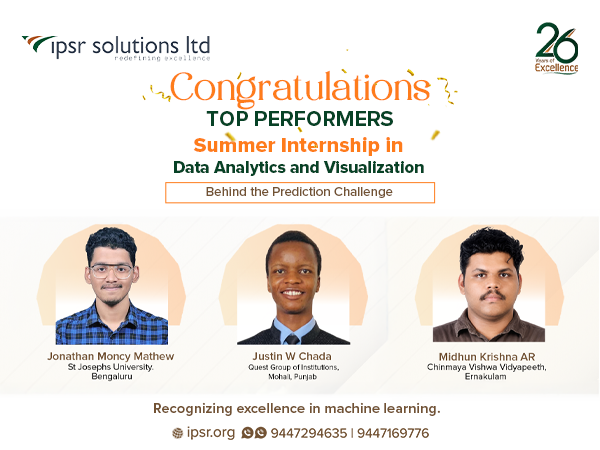
Behind the Prediction Challenge
June 18, 2026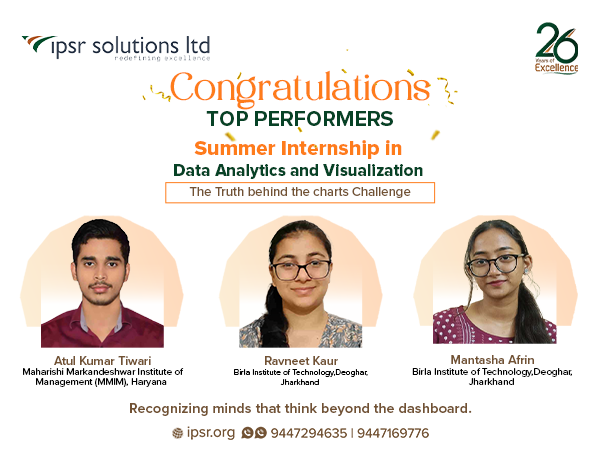
The Truth Behind the Charts Challenge
June 18, 2026
Digital Marketing Strategy
May 20, 2026