
Celebrating 26 Years of IPSR
Join our journeyThe Confusion Matrix Crime Scene Challenge
Where Data Met Detective Work
The Confusion Matrix Crime Scene Challenge was successfully conducted as an engaging and thought-provoking event that transformed a core machine learning concept into an exciting investigative experience.
The Concept
Rather than approaching a confusion matrix as just a table of numbers, this challenge placed participants inside a high-stakes scenario. They took on the role of ML Investigators, analyzing the outcomes of an AI system used in critical applications such as disease prediction and fraud detection.
The goal was simple—but far from easy:
Decode the story behind the model’s predictions and identify what went wrong.
What Happened During the Challenge
Participants were presented with a scenario-driven confusion matrix and given just 15 minutes to:
- Break down predictions into True Positives, True Negatives, False Positives, and False Negatives
- Identify the most critical type of error in the given context
- Go beyond accuracy and interpret real-world impact
- Make decisions based on consequences rather than formulas
What made the challenge unique was its focus on thinking over memorization. There were no direct formula-based answers—participants had to rely on logic, context, and clarity of understanding.
The Experience
The fast-paced nature of the event kept participants highly engaged. As the timer ticked, the room was filled with intense focus, quick reasoning, and analytical discussions.
Many participants initially approached the problem from a purely technical perspective, but quickly realized that context changes everything—especially when deciding whether a false positive or false negative is more dangerous.
Key Takeaways
- A confusion matrix is not just a metric tool—it’s a decision-making framework
- Real-world ML problems require contextual thinking, not just calculations
- Small errors in prediction can have big real-world consequences
- Critical thinking is just as important as technical knowledge in data science
Outcome
The challenge successfully pushed participants to think like real-world data scientists and analysts. It highlighted the importance of interpreting machine learning results in context, rather than relying solely on textbook definitions.
You may also like

The Learning Machine Mystery Challenge
June 26, 2026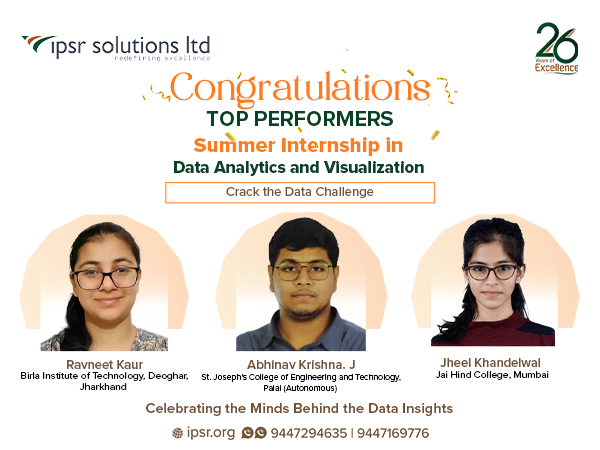
Crack the Data Challenge
June 26, 2026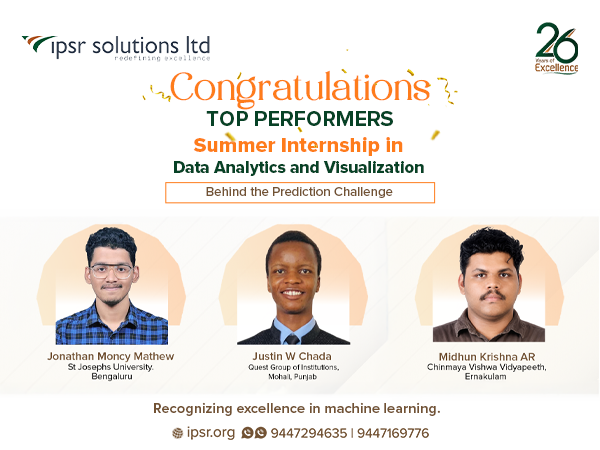
Behind the Prediction Challenge
June 18, 2026
The Truth Behind the Charts Challenge
June 18, 2026